
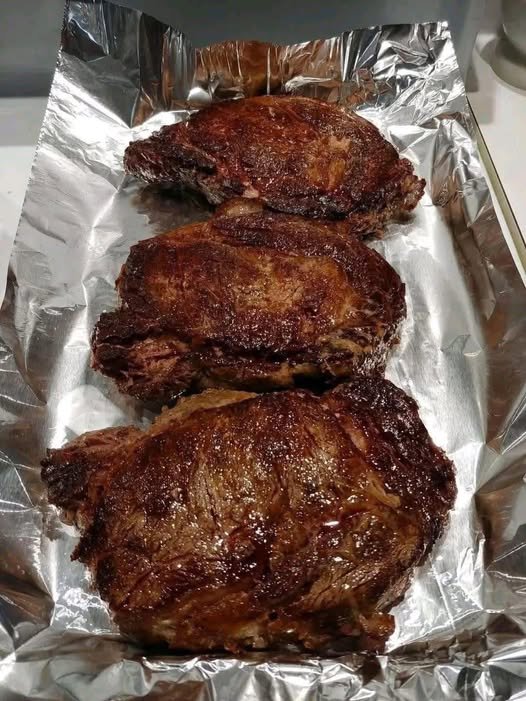
Ribeye steak is widely considered one of the most flavorful cuts of beef thanks to its rich marbling and tender texture. When cooked properly, it delivers a juicy, buttery bite with a beautifully seared crust. This recipe will guide you step by step to achieve steakhouse-quality ribeye at home using simple ingredients and straightforward techniques. Whether you’re cooking for a special occasion or just craving a satisfying meal, mastering ribeye is a skill worth having.
Ingredients
- 2 ribeye steaks (about 1–1.5 inches thick, boneless or bone-in)
- 2 tablespoons olive oil
- 1 teaspoon garlic powder
- 1 teaspoon onion powder
- 1 teaspoon kosher salt (adjust to taste)
- ½ teaspoon freshly ground black pepper
- 2 tablespoons unsalted butter
- 2–3 cloves garlic, smashed
- 2–3 sprigs fresh thyme or rosemary (optional but recommended)
Choosing the Right Ribeye
Before cooking, it’s important to start with high-quality meat. Look for ribeye steaks with good marbling—thin white streaks of fat running through the meat. This fat melts during cooking and gives the steak its signature tenderness and flavor. A thickness of at least 1 inch is ideal because thinner steaks cook too quickly and are harder to control.
If possible, let your steak sit uncovered in the refrigerator for a few hours or overnight before cooking. This dries the surface slightly, which helps create a better crust when searing.
Preparation
- Bring to Room Temperature
Remove the steaks from the refrigerator about 30–45 minutes before cooking. Letting the meat come closer to room temperature ensures more even cooking. - Pat Dry
Use paper towels to thoroughly pat the steaks dry. Moisture is the enemy of a good sear, so this step is essential. - Season Generously
Rub both sides of each steak with olive oil. Then season with garlic powder, onion powder, salt, and black pepper. Press the seasoning gently into the meat so it adheres well.
Cooking Method (Pan-Seared Ribeye)
This method uses a skillet to achieve a deep, golden crust while keeping the inside tender and juicy.
Step 1: Preheat the Pan
Use a heavy skillet, preferably cast iron, and heat it over medium-high to high heat until it’s very hot. You want the pan almost smoking.
Step 2: Sear the Steaks
Place the steaks in the pan carefully. You should hear a loud sizzle immediately. Do not move them for about 3–4 minutes. This allows a crust to form.
Flip the steaks and cook the other side for another 3–4 minutes.
Step 3: Add Butter and Aromatics
Reduce the heat to medium. Add the butter, smashed garlic cloves, and herbs to the pan. As the butter melts, tilt the pan slightly and use a spoon to baste the steaks repeatedly with the melted butter.
This step enhances flavor and helps cook the steak evenly.
Step 4: Check Doneness
Use a meat thermometer for accuracy:
- Rare: 120–125°F (cool red center)
- Medium rare: 130–135°F (warm red center)
- Medium: 135–145°F (pink center)
- Medium well: 145–155°F (slightly pink center)
- Well done: 155°F and above
Insert the thermometer into the thickest part of the steak.
Step 5: Rest the Steak
Remove the steaks from the pan and let them rest on a plate or cutting board for 5–10 minutes. Resting allows the juices to redistribute throughout the meat, preventing them from spilling out when you cut into it.
Alternative Method: Oven Finish
If your steaks are particularly thick (over 1.5 inches), you can finish them in the oven:
- Preheat oven to 400°F.
- Sear the steaks in a skillet for 2–3 minutes per side.
- Transfer the skillet to the oven and cook for an additional 5–10 minutes, depending on your desired doneness.
- Rest before serving.
Tips for Success
- Don’t overcrowd the pan: Cook one or two steaks at a time to maintain high heat.
- Avoid flipping too often: Let the crust develop before turning.
- Use a thermometer: It takes the guesswork out and ensures perfect doneness.
- Resting is non-negotiable: Skipping this step results in dry steak.
Flavor Variations
Once you’ve mastered the basic recipe, you can experiment with different flavors:
- Spicy Kick: Add chili flakes or cayenne pepper to the seasoning mix.
- Garlic Herb Butter: Mix softened butter with minced garlic and herbs, then place a dollop on the steak while resting.
- Smoky Flavor: Add a pinch of smoked paprika to the seasoning.
- Marinated Ribeye: Marinate for a few hours in olive oil, soy sauce, garlic, and herbs for a deeper flavor profile.
Serving Suggestions
Ribeye steak pairs well with a variety of sides:
- Roasted potatoes or mashed potatoes
- Steamed or grilled vegetables (asparagus, broccoli, green beans)
- Fresh salad with vinaigrette
- Garlic bread or crusty bread
For sauces, consider serving with:
- Chimichurri
- Peppercorn sauce
- Garlic butter sauce
Storage and Reheating
If you have leftovers:
- Store cooked steak in an airtight container in the refrigerator for up to 3 days.
- Reheat gently in a skillet over low heat or in the oven at a low temperature (around 250°F) to avoid overcooking.
- Avoid microwaving if possible, as it can make the meat tough.
Final Thoughts
Cooking ribeye steak at home doesn’t have to be intimidating. With just a few ingredients and the right technique, you can create a dish that rivals what you’d get at a high-end restaurant. The key lies in proper preparation, high heat for searing, and allowing the steak to rest before serving.