
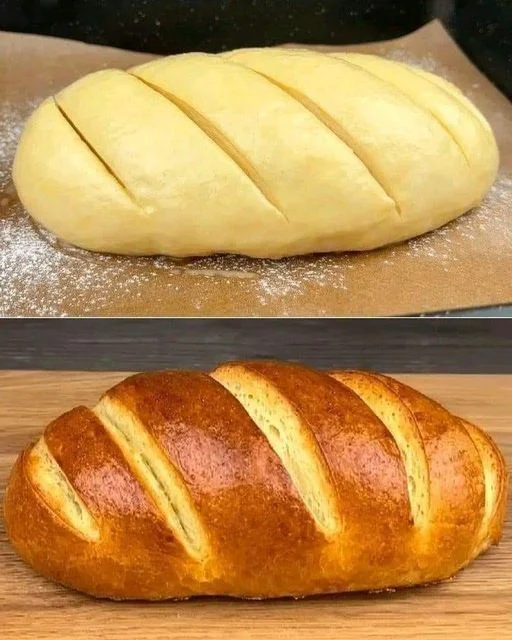
This bread is perfect for beginners and anyone looking for a low-effort, low-cost homemade loaf. It requires only a few basic ingredients and minimal hands-on time. The dough develops gluten naturally through resting rather than kneading, which is what gives the bread its structure.
Ingredients
- 3 cups all-purpose flour (about 360–400 g)
- 1 teaspoon salt
- 1 teaspoon sugar (optional, but helps activate yeast)
- 1 teaspoon instant dry yeast
- 1 to 1¼ cups warm water (around 300 ml, not hot)
Optional:
- A little oil for greasing
- Extra flour for dusting
Understanding the Ingredients
Flour provides the structure. All-purpose flour works perfectly here, though you can substitute part of it with whole wheat flour for a denser loaf.
Yeast is responsible for fermentation, which creates gas bubbles that make the bread rise and give it a light texture.
Salt enhances flavor and helps control yeast activity.
Sugar is optional but gives the yeast a quick energy source, helping the dough rise faster.
Water hydrates the flour and activates the yeast. The temperature should be warm, not hot, to avoid killing the yeast.
Step-by-Step Instructions
1. Mixing the Dough
In a large bowl, combine the flour, salt, sugar, and yeast. Stir the dry ingredients together so they are evenly distributed.
Gradually pour in the warm water while mixing with a spoon or spatula. The dough will look rough, sticky, and somewhat shaggy. That is exactly what you want. Do not try to knead it or make it smooth.
The consistency should be soft and slightly sticky, not dry. If it feels too dry, add a little more water, one tablespoon at a time. If it is too wet, sprinkle in a bit more flour.
2. First Rise (Fermentation)
Cover the bowl with plastic wrap, a lid, or a clean kitchen towel.
Let the dough rest at room temperature for about 1 to 2 hours, or until it has doubled in size. In cooler environments, this may take longer.
During this time, the yeast ferments and creates air pockets, which will form the structure of your bread. This replaces the need for kneading.
3. Shaping the Dough
Once the dough has risen, lightly flour your work surface.
Turn the dough out onto the surface. It will be soft and slightly sticky, so handle it gently. Sprinkle a bit of flour on top to make it easier to work with.
Instead of kneading, fold the dough over itself a few times (about 5–6 folds). This helps build some structure without traditional kneading.
Shape the dough into a loaf by tucking the edges underneath to form a smooth top.
4. Second Rise
Place the shaped dough onto a baking tray lined with parchment paper or lightly greased.
Cover it loosely and let it rise again for about 30 to 45 minutes. It should become slightly puffed.
5. Scoring the Dough
Before baking, use a sharp knife or blade to make a few shallow cuts across the top of the dough. This step is called scoring.
Scoring allows the bread to expand properly in the oven and also gives it a classic, rustic appearance.
6. Baking
Preheat your oven to 200°C (390°F).
Place the dough in the oven and bake for 25 to 35 minutes, or until the top is golden brown.
To check if the bread is done:
- Tap the bottom of the loaf; it should sound hollow
- The crust should be firm and golden
7. Cooling
Remove the bread from the oven and place it on a wire rack to cool.
Allow it to cool for at least 20–30 minutes before slicing. Cutting too early can affect the texture, as the inside is still setting.
Texture and Flavor
This bread has:
- A crisp, golden crust
- A soft, airy interior
- A mild, slightly yeasty flavor
Because it contains no butter or eggs, it is lighter and more neutral, making it suitable for both savory and sweet uses.
Tips for Success
1. Water Temperature Matters
If the water is too hot, it will kill the yeast. Aim for warm, around body temperature.
2. Do Not Overwork the Dough
This is a no-knead recipe. Minimal handling is key to maintaining a soft texture.
3. Use the Right Environment
If your kitchen is cold, let the dough rise in a slightly warm place, such as inside an oven with the light on.
4. Flour Adjustments
Different flours absorb water differently. Adjust as needed to get a soft, slightly sticky dough.
Variations
1. Whole Wheat Version
Replace up to 50% of the all-purpose flour with whole wheat flour for a more nutritious loaf. You may need slightly more water.
2. Herb Bread
Add dried herbs like oregano, thyme, or rosemary to the dry ingredients for extra flavor.
3. Garlic Bread
Mix in minced garlic or garlic powder for a savory twist.
4. Seeded Bread
Sprinkle sesame seeds, sunflower seeds, or flaxseeds on top before baking.
5. Rustic Crust
Place a small oven-safe dish with water in the oven while baking. The steam helps create a crispier crust.
Storage
At Room Temperature
Store the bread in a paper bag or wrapped in a clean cloth for up to 2 days.
Refrigeration
Not recommended, as it can dry out the bread.
Freezing
Slice the bread and freeze in an airtight bag for up to 2 months. Reheat slices in a toaster or oven.
Why This Recipe Is So Effective
This method works because time replaces effort. Instead of kneading to develop gluten, the dough rests and ferments, allowing gluten strands to form naturally.
The result is bread that is:
- Easy to prepare
- Economical
- Versatile
- Consistently good
It removes many of the barriers that discourage people from baking bread at home.
Serving Ideas
This bread can be used in many ways:
- With soups and stews
- As sandwich bread
- Toasted with jam or honey
- Served alongside salads
- As a base for bruschetta
Common Mistakes to Avoid
- Using hot water that kills yeast
- Adding too much flour, resulting in dense bread
- Not allowing enough rising time
- Cutting the bread too soon after baking
Conclusion
This no-knead, no-egg, no-butter bread proves that making fresh, homemade bread does not have to be complicated or expensive. With just a handful of ingredients and a simple method, you can produce a loaf that rivals store-bought bread in both taste and texture.