
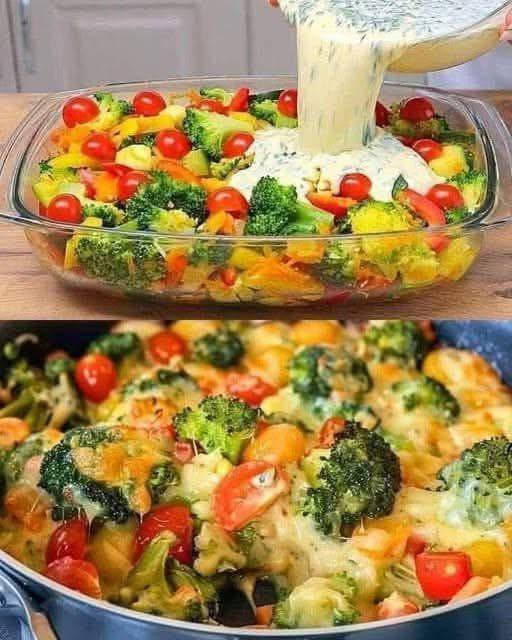
This vegetable casserole is designed to be nutrient-dense, filling, and relatively low in calories while still feeling comforting and rich. It relies on high-fiber vegetables, minimal oil, and a light creamy topping that gives the impression of indulgence without excessive calories.
Ingredients
Vegetables (Base):
- 1 large broccoli, cut into bite-sized florets
- 1 handful of baby kale (or spinach as a substitute)
- 1 small onion, finely diced
- 7 small cloves of garlic, minced
- 12 cherry or grape tomatoes, halved
- 1 medium carrot, thinly sliced
- 1 small zucchini, sliced into half-moons
- 1 bell pepper (any color), sliced
For Cooking:
- 1–2 teaspoons olive oil
- Salt, to taste
- Black pepper, to taste
Optional Seasonings (recommended for flavor depth):
- 1 teaspoon dried oregano
- 1 teaspoon dried basil
- ½ teaspoon paprika
- A pinch of chili flakes (optional)
Light Cream Sauce (Low-Calorie Alternative)
Instead of heavy cream, this lighter version gives a creamy texture without excess fat:
- 1 cup low-fat milk (or unsweetened plant milk)
- 1 tablespoon flour (or cornstarch for gluten-free)
- 2 tablespoons grated parmesan (optional, for flavor)
- ½ teaspoon garlic powder
- Salt and pepper to taste
Optional: Add 2 tablespoons low-fat cream cheese or Greek yogurt for extra creaminess.
Optional Topping
- ¼ cup shredded low-fat mozzarella or cheddar
- 1 tablespoon breadcrumbs (optional, for a slight crunch)
Preparation Steps
1. Preparing the Vegetables
Start by washing all vegetables thoroughly. Cut the broccoli into evenly sized florets so they cook uniformly. Slice the carrots thinly so they soften easily during baking. Dice the onion finely to distribute flavor throughout the dish. Halve the cherry tomatoes, which will release juices and add natural sweetness when cooked.
Uniform cutting is important because it ensures that everything cooks at the same rate. If some pieces are too large, they may remain undercooked while others become too soft.
2. Pre-Cooking for Better Texture
Preheat your oven to 180°C (350°F).
Bring a pot of lightly salted water to a boil and blanch the broccoli for about 2–3 minutes. This step softens the broccoli slightly and preserves its bright green color. Immediately drain and rinse with cold water to stop the cooking process.
This step is optional but recommended because it prevents the casserole from becoming watery and ensures a tender but not mushy texture.
3. Sautéing Aromatics
Heat olive oil in a large skillet over medium heat. Add the diced onion and cook for about 3–4 minutes until it becomes soft and translucent. Then add the minced garlic and cook for another 30 seconds to 1 minute until fragrant.
Be careful not to burn the garlic, as it can turn bitter quickly.
Add the sliced carrots, zucchini, and bell pepper. Cook for 5–7 minutes until slightly softened. Season with salt, pepper, oregano, basil, and paprika.
This step builds the flavor base of your casserole. Cooking the vegetables slightly beforehand removes excess moisture and enhances their natural sweetness.
4. Adding Greens and Tomatoes
Add the baby kale and cherry tomatoes to the skillet. Stir gently and cook for another 2–3 minutes until the kale wilts slightly and the tomatoes begin to soften.
Turn off the heat and set aside.
5. Preparing the Light Cream Sauce
In a small saucepan, whisk together the milk and flour until smooth. Place over medium heat and stir continuously until the mixture thickens slightly.
Add garlic powder, salt, pepper, and parmesan (if using). Stir until well combined.
If you want extra creaminess without too many calories, stir in a small amount of Greek yogurt or low-fat cream cheese after removing from heat.
The goal is a smooth, pourable sauce that lightly coats the vegetables rather than overwhelms them.
6. Assembling the Casserole
Lightly grease a baking dish.
Layer the sautéed vegetable mixture evenly in the dish. Add the blanched broccoli on top and gently mix everything together.
Pour the cream sauce evenly over the vegetables. Use a spoon or spatula to ensure the sauce spreads throughout.
If using cheese, sprinkle a small amount on top. Add breadcrumbs if you want a lightly crisp surface.
7. Baking
Place the casserole in the preheated oven and bake for 20–25 minutes, or until the top is lightly golden and the sauce is bubbling.
If you prefer a slightly crispy top, you can switch to broil for the last 2–3 minutes, but watch carefully to avoid burning.
Serving Suggestions
Allow the casserole to rest for about 5 minutes before serving. This helps the sauce set slightly and makes it easier to portion.
You can enjoy this dish:
- As a standalone meal for a low-calorie dinner
- As a side dish with grilled chicken or fish
- Paired with a small portion of whole grains like quinoa or brown rice
Why This Recipe Supports Weight Loss
This casserole works well for weight loss because:
- High Fiber Content: Vegetables like broccoli, kale, and carrots are rich in fiber, which helps you feel full longer.
- Low Calorie Density: You can eat a large portion without consuming too many calories.
- Balanced Nutrients: Provides vitamins, minerals, and antioxidants.
- Controlled Fat: Uses minimal oil and lighter dairy options.
- Satisfying Texture: The creamy sauce and baked format make it feel indulgent without excess calories.
Tips for Best Results
- Do not skip seasoning. Low-calorie food should still be flavorful.
- Avoid overcooking vegetables before baking; they will continue cooking in the oven.
- Use fresh garlic instead of garlic powder where possible for stronger flavor.
- Adjust the thickness of the sauce depending on preference—thicker for comfort, thinner for lighter texture.
Variations
You can customize this casserole easily:
- Add mushrooms for a richer, umami flavor
- Include cauliflower alongside broccoli
- Use spinach instead of kale for a softer texture
- Add cooked lentils or chickpeas for plant-based protein
- Use nutritional yeast instead of cheese for a dairy-free option
Storage and Meal Prep
This casserole stores well in the refrigerator for up to 3–4 days. Reheat in the oven or microwave.
For meal prep:
- Divide into portions after baking
- Store in airtight containers
- Reheat as needed for quick, healthy meals
You can also freeze it, though the texture of some vegetables may soften slightly after thawing.
Final Thoughts
Eating a vegetable casserole regularly can support weight loss, but results depend on overall calorie intake and lifestyle. This dish is a great foundation because it is filling, nutritious, and easy to prepare in large batches.